Middle East War Pushes China Toward the Arctic Trade Route
The Middle East conflict and the heightened threats to shipping in the Red Sea have prompted China to boost the use of the Arctic to move containers from the Chinese east coast to Europe.
The fast-melting Arctic ice offers an alternative shipping route in the summer as the Houthi threats to shipping in the Red Sea and the Bab el-Mandeb Strait make cargo operators more cautious in transiting the key chokepoints in the Middle East.
Shipping through the Arctic is not something new, but this time around – driven by melting ice caps and more dangerous routes further south – a Chinese container shipping firm is launching a regular weekly shipping service via the Arctic to Europe.
China’s Sea Legend, focused on Turkey and North Africa, is launching this week the first regular container shipping service through Arctic waters, the Financial Times reports.
Arctic Alternative
The journey through the Arctic, which Sea Legend refers to as “Ice Silk Road”, cuts the voyage time between Ningbo on the east coast of China and Felixstowe in the UK by about half, FT notes.
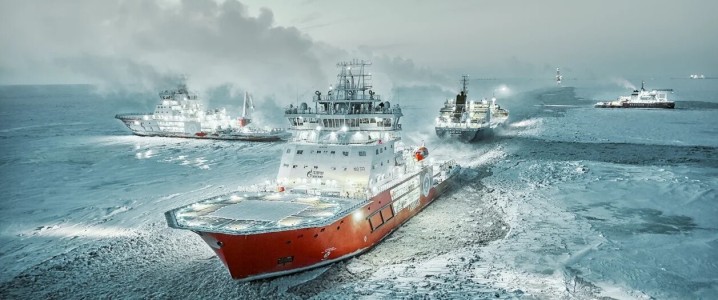
Due to the melting polar ice caps, container shipping cargoes do not need to be accompanied by ice-breaker class vessels to move through Arctic waters in the summer. This makes shipping via the so-called Northern route around Russia easier and cheaper to arrange.
China and its shipping services stand to benefit the most from the Arctic route as Western shippers are wary of making the journey due to the strained relations with Russia and concerns about the Arctic environment and wildlife.
While Denmark-based shipping giant Maersk made one voyage through the Arctic in 2018, it has ruled out the route as a service, as have other Western container shippers such as Hapag Lloyd and MSC.
In September last year, MSC Mediterranean Shipping Company reaffirmed its commitment to avoid the Northern Sea Route, as the Arctic waterway “remains underdeveloped for commercial shipping since safe navigation and transit are not assured.”
“An increase in Arctic transit traffic may also impact the fragile ecosystem of the region and the ice caps,” MSC said.
Nearly a year after this statement, neither MSC nor other Western shippers have changed their position regarding the ‘no-go’ container shipping through the Arctic despite the threat to shipping at the Middle East’s key chokepoints, the Strait of Hormuz and the Bab el-Mandeb Strait.
But China perseveres, and also thanks to its good relationship with Russia, it doesn’t appear to be concerned about using the Arctic route.
Arctic Shipping Challenge
The navigation of vessels in the water area of the Northern Sea Route is organized by Russia’s State Atomic Energy Corporation Rosatom. Russia basically issues permits to ships willing to transit the so-called ‘Northern Sea Route’.
Hence, the hesitancy of the Western shipping giants to brave the Arctic waters, apart from climate and environmental concerns.
Geopolitical reasons aside, there are also operational safety limits and threats to the ‘Ice Silk Road’.
Ships could get stuck around ice, even in the summer, search and rescue operations in this remote corner of the world are difficult to organize from land, and there is always the threat of an oil spill that could endanger the sensitive Arctic environment.
“To deal with a contingency or casualty in the Arctic is much more difficult,” Rahul Khanna, global head of marine risk consulting at insurance giant Allianz, told FT.
Khanna noted, however, that some shipping companies view the Arctic route as one bypassing the hottest geopolitical flashpoints in the Middle East.
Allianz has cautioned that in the decade to 2023 there have been 531 reported incidents in Arctic waters, per Allianz Commercial analysis.
“The harsh operating environment means machinery damage/failure is the most frequent cause of incidents, accounting for almost half of this total (261),” Allianz has said.
The Arctic route could be a boon to Chinese shipping as it halves journeys from Asia to Europe in the summer, especially as vessels have difficulties passing through the Middle East’s chokepoints.
The Houthi threat to shipments of Saudi crude oil from the Red Sea hasn’t abated, and more tankers laden with Saudi oil appear to have made the transit through the Bab el-Mandeb chokepoint in dark mode.
True, Iran and the Iran-aligned Houthis refrain from targeting China-linked cargo in the Strait of Hormuz and the Bab el-Mandeb Strait. But there is always the chance of miscalculation and inadvertent threat to any ship in these waters nowadays.
For the Western shippers, the Arctic isn’t really an alternative to the Suez Canal and the Red Sea. In Arctic waters where navigation is controlled by Russia, there is little incentive to ship cargo on West-linked vessels.
If necessary, they will be rerouting through the route around the southern tip of Africa at the Cape of Good Hope, although this usually means much longer voyages.
This post appeared first on https://oilprice.com